
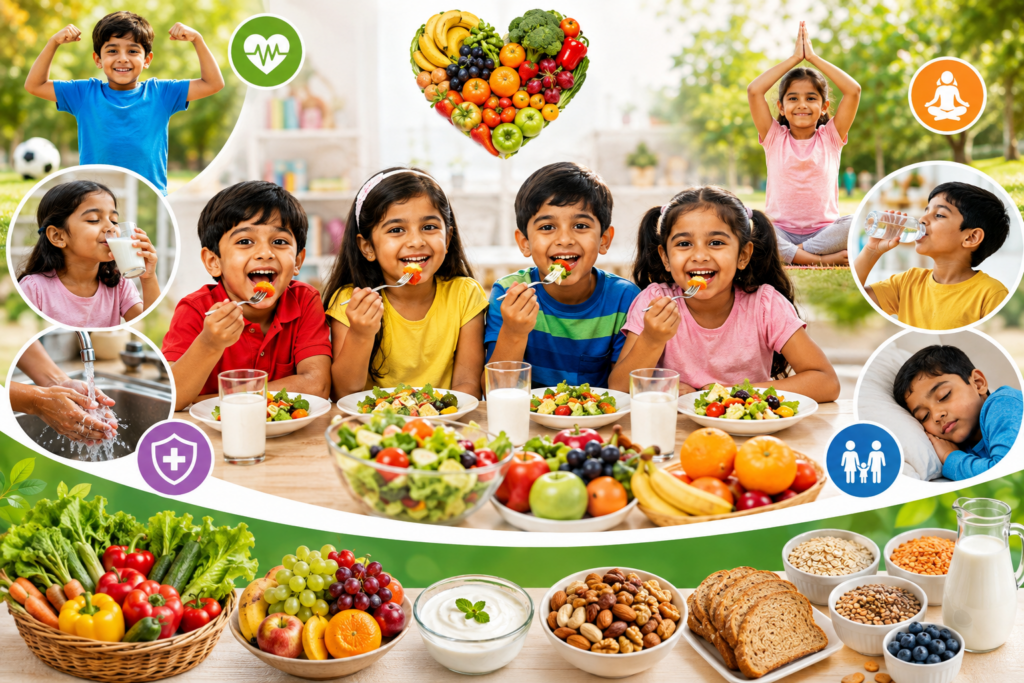
Daily Child Health Tips
Introduction
Child health tips are important for parents who want to build healthy eating habits in their children. Every parent dreams of seeing their child grow into a healthy, active, and confident individual. Good health does not begin in adulthood—it starts in childhood. The eating habits, daily routines, and lifestyle choices children develop during their early years often stay with them for life. Parents play the most important role in creating these healthy habits by providing nutritious food, encouraging physical activity, limiting unhealthy choices, and leading by example.
Why Healthy Eating Matters
Children require balanced nutrition to support rapid physical growth, brain development, strong immunity, and emotional well-being. A healthy diet also improves concentration, learning ability, energy levels, and overall development.
Nutritious meals today contribute to a healthier future by reducing the risk of obesity, diabetes, heart disease, and other lifestyle-related health problems.
Limit Junk Food Consumption
Fast food, sugary snacks, carbonated drinks, packaged chips, and highly processed foods often contain excessive sugar, unhealthy fats, and salt while offering very little nutritional value. These also effected children teeth, then should take Dental Treatment.
Parents should avoid making these foods a regular part of a child’s diet. Instead of banning them completely, reserve them for occasional treats and encourage healthier alternatives during everyday meals.
Children naturally follow the habits they observe at home. If healthy food becomes the family’s normal choice, children are more likely to enjoy nutritious meals without feeling restricted.
Offer Balanced and Colorful Meals
A healthy plate should include a variety of food groups:
- Fresh fruits rich in vitamins and antioxidants
- Green vegetables for fiber and minerals
- Whole grains for long-lasting energy
- Protein sources such as eggs, fish, beans, lentils, milk, yogurt, or lean meat
- Healthy fats from nuts, seeds, and natural oils
Colorful meals are visually appealing and usually provide a wider range of essential nutrients.
Encourage Healthy Snacks
Children often become hungry between meals. Replace unhealthy snacks with nutritious options such as:
- Fresh fruit slices
- Homemade vegetable sandwiches
- Boiled eggs
- Yogurt
- Roasted nuts (age appropriate)
- Sprouts
- Homemade smoothies without added sugar
Healthy snacks keep children energetic without unnecessary calories.
Make Water the First Choice
Water is essential for proper digestion, body temperature regulation, and overall health. Encourage children to drink water throughout the day instead of sugary beverages or soft drinks.
Keeping a water bottle within easy reach helps children develop healthy hydration habits.
Never Skip Breakfast
Breakfast is one of the most important meals of the day. A balanced breakfast improves concentration, memory, and physical performance during school hours.
Healthy breakfast ideas include oatmeal, fruits, eggs, whole-grain bread, milk, yogurt, or homemade vegetable dishes.
Reduce Screen Time During Meals
Children should eat without watching television, mobile phones, or tablets. Screen distractions often lead to overeating and reduce awareness of hunger and fullness.
Family meals without digital devices encourage better communication and healthier eating behaviors.
Encourage Daily Physical Activity
Healthy eating works best when combined with regular movement.
Children should spend time playing outdoors, cycling, running, dancing, swimming, or participating in sports every day.
Physical activity strengthens muscles and bones, improves heart health, maintains a healthy weight, and supports emotional well-being.
Ensure Adequate Sleep
Growing children require sufficient sleep for healthy brain development and physical growth.
Maintain a consistent bedtime routine and reduce screen exposure before sleeping to improve sleep quality.
Teach Good Hygiene Habits
Parents should encourage children to:
- Wash hands before eating
- Brush teeth twice daily
- Bathe regularly
- Keep fingernails clean
- Drink safe and clean water
Lead by Example
children learn more from actions than words. Parents who regularly eat fruits and vegetables, exercise, drink water, and avoid excessive junk food naturally inspire similar habits in their children.
Creating a healthy home environment is one of the most effective ways to build lifelong wellness.
Avoid Using Food as a Reward
Offering chocolates or fast food as rewards may create unhealthy emotional eating habits.
Instead, reward children with praise, books, outdoor activities, family games, or extra playtime.
Schedule Regular Health Check-ups
outline pediatric check-ups help monitor growth, nutrition, vaccinations, vision, dental health, and overall development.
Early identification of health concerns allows timely treatment and better long-term outcomes.
Create Positive Eating Experiences
Avoid forcing children to eat or criticizing their food choices. Introduce new foods gradually and make meals enjoyable.
Allow children to help prepare simple meals, choose fruits and vegetables during shopping, and participate in family cooking. This increases their interest in healthy foods.